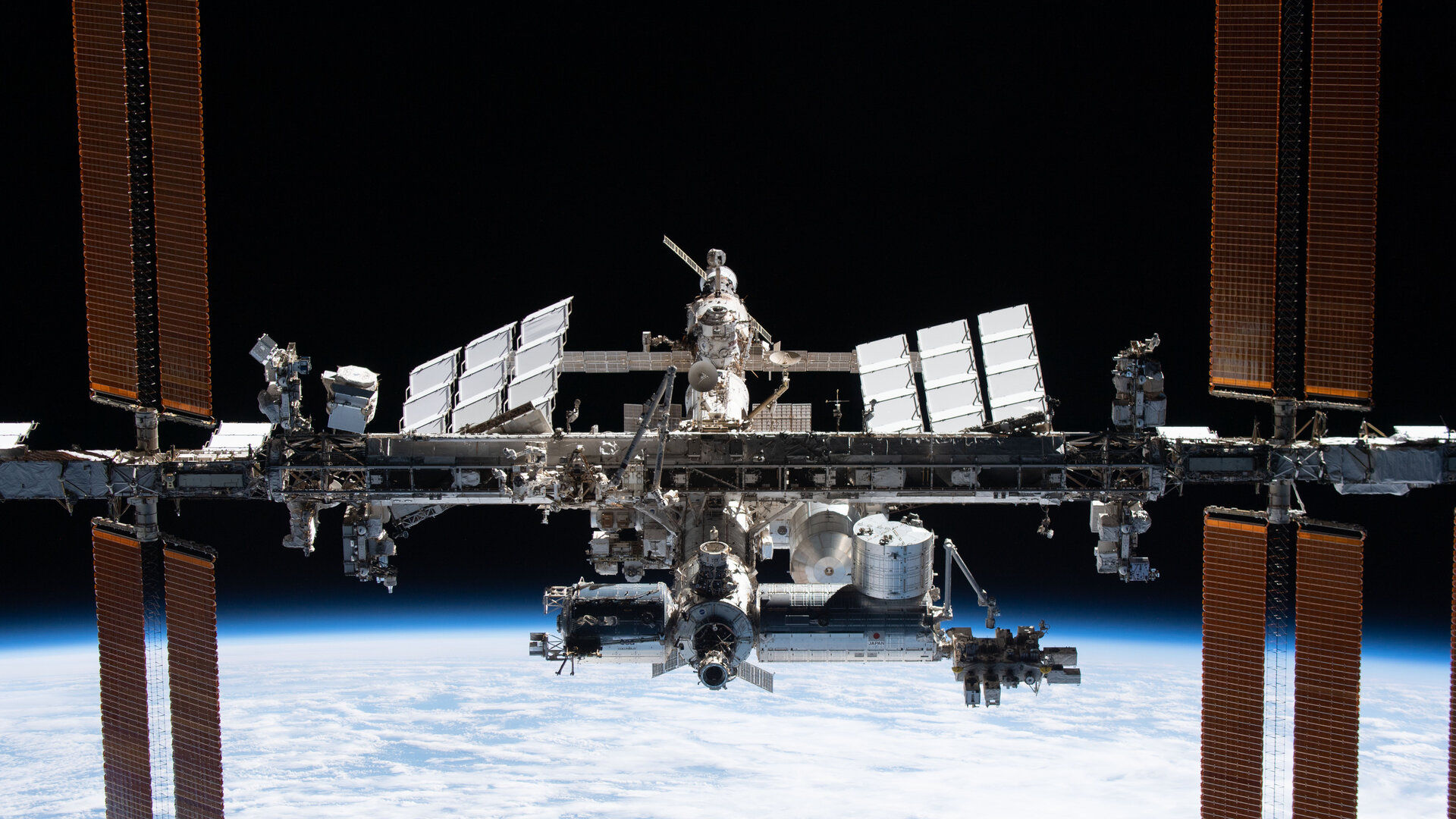
The Science of Low Earth Orbit (LEO)
Low Earth orbit (LEO) is an orbit around Earth with an altitude between 160 kilometers (99 mi) and 2,000 kilometers (1,200 mi). Most of the man-made objects in outer space are in LEO, including the International Space Station.
Objects in LEO are subject to atmospheric drag from the thermosphere (approximately 80–500 km) or exosphere (approximately 500 km and up), depending on the orbit height. This drag causes the orbit to decay over time, which is why the ISS requires periodic "re-boosts" to maintain its altitude.
The ISS orbits at an average altitude of 400 km. At this height, it travels at a staggering speed of 7.66 km/s (27,600 km/h), completing one revolution around Earth every 90 minutes. This means astronauts on board witness 16 sunrises and sunsets every single day!